
Disclaimer: this article and every article on my Substack do not represent the opinions of my employer, or any affiliated organizations and public bodies I volunteer with or serve on. These posts are my private opinions in my individual capacity.
—
San Francisco is in the midst of a political war over its plan to rezone commercial corridors on the west side of the city for higher-density apartments. Oakland has already re-zoned its iconic Rockridge district along College Ave. for mid-rise buildings several months ago. Last week, Berkeley had a hearing on its proposal to upzone a smaller portion of College Ave. known as The Elmwood, and two linear commercial districts in North Berkeley. The first council hearing on the upzoning witnessed significant opposition from merchants. The reason cities are doing this is that the federal government on condition of receiving public funds, has begun enforcing “Affirmatively Furthering Fair Housing” rules, which require equality of residential land uses between low-income and high-income neighborhoods. This framework began with the Civil Rights Act of 1968, but enforcement was started by the Obama Administration.
At a high level, I’m excited about our proposal. I have long wanted dense, new housing on transit corridors in my neighborhood in North Berkeley, which is rapidly aging at the rate of Floridian retirement communities, rich with 4 supermarket grocery stores, and inaccessible to middle-class young people. Voters appear supportive of these initiatives, too. The notoriously anti-growth and affluent towns of Marin County saw two major issues, commercial upzoning in iconic Sausalito and the recall of a pro-development councilmember in Fairfax, pass and fail this November with strong margins.
There are valid concerns that need addressing with commercial upzoning, especially as cities dictate more density to commercial areas over existing residential ones. At Berkeley’s first council meeting on the subject, there were the usual anti-development regulars but the vast majority of merchants who spoke were not NIMBYs. They were earnestly worried that development would lead to their removal and replacement with chain stores that can afford the new commercial rents or survive the construction period. While research suggests that new housing lowers area residential rents and increases residential mobility, it’s not as clear that new housing is good for incumbent businesses as proponents of commercial upzoning imply it is.
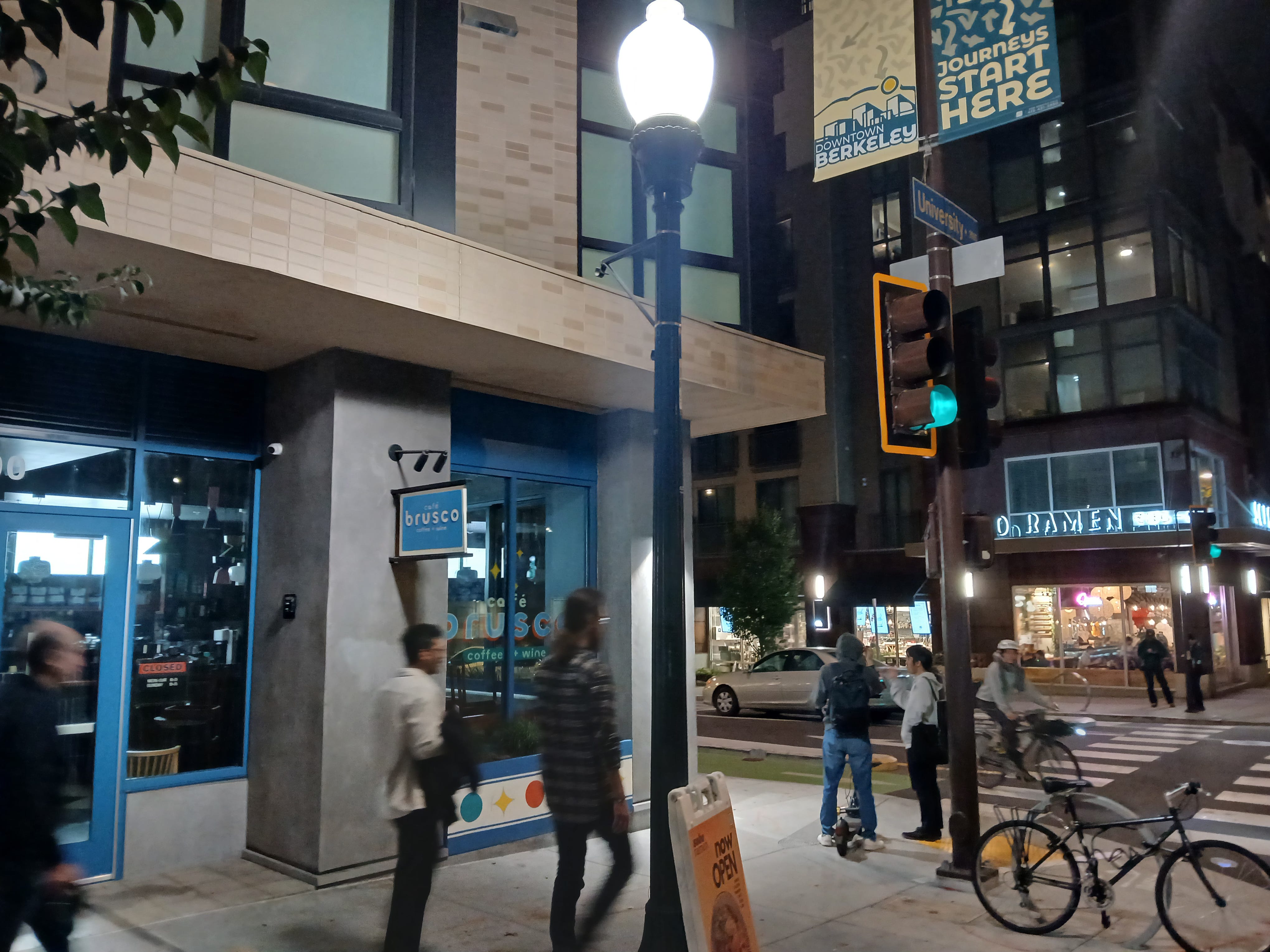
How effective were previous commercial corridor rezonings at accomplishing increased commercial uniqueness, sustainability and vibrancy? There’s no better case example than Berkeley’s downtown plan. At the council hearing, anti-upzoning opponents frequently cited that downtown has two blighting development projects that have stalled and implied this may besiege their quaint districts.
One of these projects, colloquially referred to as Harold Way, although now largely forgotten, was the product of a decade-long showdown of lawsuits and meetings that piqued my personal interest in housing as a freshman in high school. It shouldn’t take the duration of three presidents to approve and build a rather common high-rise apartment. The state passed a law (S.B. 330) written in response to Harold Way that capped this situation from happening again. Unfortunately, we lost our great children’s museum, Habitot, and I encourage you to donate if you can.
The other, more egregious blight by a developer named Chicago Ventures sits as a vacant husk on Center Street, which was once a bustling strip of daytime shops nestled at the gateway to UC Berkeley. Chicago Venture’s stalled project, its widely disapproved method of local merchant replacement, and its tight-lipped public communications to a supportive public have been the biggest poster child for a bad outcome of commercial redevelopment. Although I’ve been told by city staff that the project developer is actively planning to resume work next year, until this project moves forward, this developer will continue to be held up as the worst-case scenario.
Note that preservation has not shielded downtown from vacancies, either. The Downtown Plan was a compromised and sometimes incoherent document that protected many old buildings as it encouraged new development. These old buildings, such as the Shattuck Hotel, the Post Office, old department store buildings further south, and soon to be the former location of Half Price Books have been and will be riddled with unsightly vacancies.
As bad as vacancies and stalled projects are, nobody remembers them once they're completed. “Telegraph and Haste” was synonymous with Center Street today: an ugly, blighted, empty lot for over 20 years. But housing was finally built over it, and a 20-year association with “blighted lot” was erased from local memory, overnight.
Overall, since the passage of the Downtown Plan and the influx of downtown residents, the amount of foot traffic in downtown is quite high, and on par with San Francisco and Oakland’s downtown. Downtown nightlife hasn’t been this plentiful with clubs, bars and restaurants in decades. But there’s no disputing that downtown has struggled thanks to stalled development projects and vacant older buildings. The southern part of Shattuck has not seen any street vibrancy despite the development of high density buildings, but I argue a major culprit is the hostility of the freeway-like multi-lane roadway.
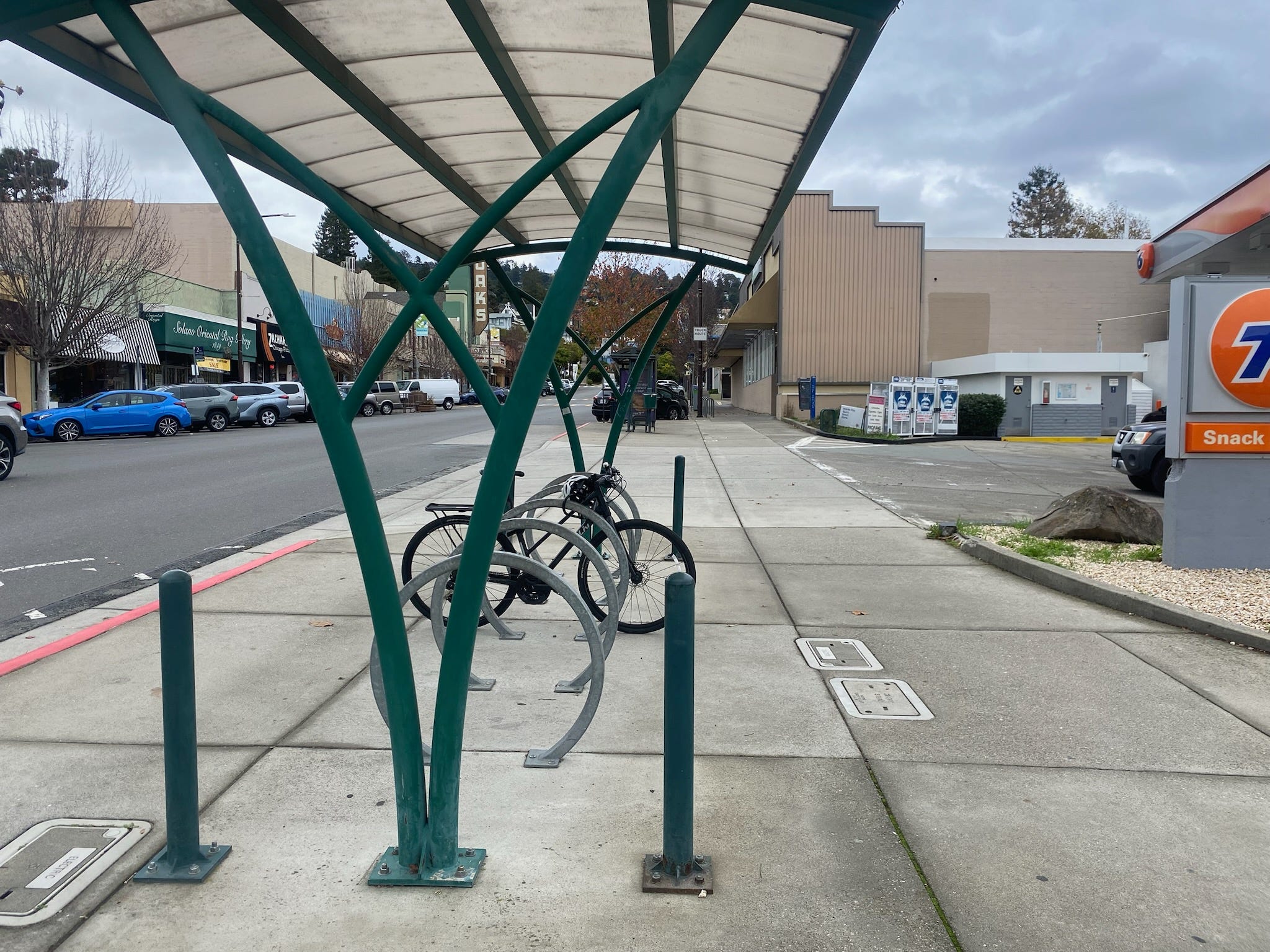
All commercial districts in Berkeley are great districts and Solano and North Shattuck are no exception. I frequent the Elmwood (College Ave.) area some weekends and it’s lively. Solano has less foot traffic on it, even at noontime on the weekends. I walk Solano almost daily, and outside of the Peet’s Coffee patio, it can feel like a ghost town sometimes — except at random peaks when schoolkids come walking about. North Shattuck and College Avenue have a decent smattering of people, especially in the morning and noon hours. College Ave. benefits from proximity to UC Berkeley so on weekends its often packed with college kids and neighborhood seniors getting brunch.
Dining on North Shattuck is some of the best in the world, and it’s seamless with the dining on the downtown portion of Shattuck north of Allston Way. However, downtown feels more lively after hours, thanks to the collection of clubs and lounges alongside the dining spots. The same is true for downtown Oakland, which has seen an explosion in eateries and restaurants meant for after-hours crowds post-development.
Where North Berkeley and Elmwood beat downtown is the weekends. They do feel, relatively to their size, much more vibrant than downtown on Saturday and Sundays, particularly at 12 PM. I don’t ever remember weekend mornings ever being vibrant downtown due to the decline in commuter traffic, but downtown lacks as high a concentration of brunch diners and morning cafes, which has gotten more desolate since the pandemic. Although new cafes are opening downtown once again, part of the problem is neglectful commercial landlords like the blighted property beneath the Shattuck Hotel.
So downtown isn’t perfect and it has many issues, but it’s not dead. It’s definitely changed in a lot of ways, particularly in the kind of cuisine we have. Many of my favorite hot dog and burger joints downtown have been replaced with international Asian cuisine like hot pot, barbecue, ramen, boba and dumpling shops. I love the old food and I’ve also learned to really love the new cuisine popping up downtown. There has also been a boom in Hispanic and organic restaurants. The new places downtown are packed with diverse crowds, but it sucks to see them intermixed with vacant properties.
But has this housing boom been good for incumbent businesses as it has been for newcomer restaurants? If the business owns its building, yes. They’ve gotten lots of new customers, or they were happy to sell and retire in peace. Some local shops, like Endless Summer Sweets, a sugarbowl for high schools and college kids, returned to its spot after development and is packed at lunch time. Others, like the New York Times-acclaimed Rose Pizzeria, quickly nabbed an expansion into a coffee shop at a newly built retail space beneath an apartment.
But in most cases, a lot of stores that weren’t cafes or restaurants have not returned under new housing projects downtown. Nearly all of the ground-floor commercial spaces in new developments in Berkeley and Oakland have been cafes, restaurants and food-related services, gyms, or banks. These businesses post higher profits and stand a better chance of surviving a 10-year commercial lease. Many former merchants downtown have been frustrated with the process of eviction for new housing and the commercial stalls replacing them are not as accommodating or affordable. After their lease ends, there’s really little other retail space available in the area.
Older commercial districts, which make up Solano, North Shattuck and Elmwood, were built to initially house high-margin retail businesses of their period. Through generations of filtered commercial rents, they now house unique, low-margin shops you don’t normally find in new developments. It is nice that older commercial districts have a variety of businesses like gift stores, trinket shops, hardware, salons, and furniture stores that wouldn’t return the revenue to survive in new development. The fear of upzoning is understandable.
The declining diversity in commercial districts is many years old. People now shop online for clothes, medication, and trinkets, and mostly go out for food and beverages only. Commercial stalls in new developments are fast-forwarding what is inevitable for many commercial districts. Right now, gyms and fitness are all the rage, replacing once vacant spaces around Berkeley’s commercial strips. There will be new commercial activities with high margins that dominate the future stalls of mixed-use developments.
But the local city government also has responsibility for the merchant struggles, specifically the ease and cost of getting permits and licenses to open a business. Berkeley has historically been an anti-business city, which only passes policies that give advantages to incumbents over chains and newcomers. What incumbent businesses fail to understand is that this hurts them too, because it makes turnover and evolution unnecessarily long and complicated here.
While Solano Ave. in Berkeley has struggled with vacancies and foot traffic, the Albany section of Solano is significantly more vibrant. In Albany, Solano is rich with new restaurants, which aid the non-high-margin businesses like toy stores, spice stores, and trinket shops by putting more patrons on the sidewalks to stroll by. When I talk to merchants on Solano, they tell me that the hurdles to getting permits and business licenses in Albany are much easier than in Berkeley, and that Albany city staff dedicate tremendous time to assisting local businesses.
Local and state permitting for businesses is cumbersome and expensive. This results in prolonged periods of vacancy, not only in downtown but also in the small, commercial districts. I’m reminded of this Chinese entrepreneur, shocked at how long it takes to get permission to renovate in the U.S., just due to the lethargic responsiveness of local government.
Wang said the biggest cultural shock for her is the time it takes to open a store in the US. Ningji decided to take over the fully functioning venue of a shuttered beverage store in the Los Angeles suburb of Glendale last November, but as of early February, Wang was still waiting for the license to be approved to start the renovation. “I am speechless,” said Wang. “We open a new store on average in 20 days in China.”
In the US, especially with inattentive or underfunded local governments, the timeline and process require consultants and lawyers. The local city government is often so understaffed that the issuing of permits takes months on end. The entire process takes years. We really need a YIMBY movement for retail and commercial activity, the way we have one for building for housing. The time it takes to get permits and licenses to open up businesses kills local businesses, which kills the prospect of walkable cities, even with density. Without an easing in the opening and operation of local businesses, development means almost certain closure for businesses without decent margins.
Moreover, city councils are signaling their desire to drop ground-floor commercial requirements. I strongly oppose this. While not having ground-floor commercial makes sense for residential-only or primarily residential neighborhoods, to replace commercial slots in existing commercial places with residences forecloses any business ever operating there. Shattuck Avenue from Francisco to Virginia has a dead zone of residential-only mid-century apartments with only their gaping parking garages to greet you before the vibrant commercial activity re-commences. When commercial space is lost for development projects, it inflates commercial rents and reduces mobility and opportunity for future businesses.
If American cities persist with this path of least resistance by only placing high-density housing on commercial strips, we’re at risk of cities becoming high-density suburbs without walkability that made the commercial areas ideal for density in the first place. So what should accompany commercial upzoning to guard against this?
1 — Opening a business should be doable in 6 months to 1 year.
This isn’t specific to upzoning, this is a local government administrative issue. Commercial building permits need to be streamlined substantially, and commercial licenses that aren’t required by state authorities should be dropped or streamlined. The California legislature recently passed a law known as the “Housing Shot clock” where if city governments fail to issue certificates to housing developers within 30 days, a third-party reviewer can grant it to them instead. We need to bestow that same grace onto local businesses and commercial interests. If non-life-threatening licenses aren’t issued within a month or two, let a third-party review get it for you.
2 — Require Commercial Ground Floor and Expand Commercial Zones.
I’d favor abolishing commercial requirements for new housing if we were expanding commercial zones, but we’re not. Commercial zoning shouldn’t even exist. Anyone should be allowed to open a restaurant or non-industrial, non-hazardous retail store wherever they want. That would take a lot of power away from commercial landlords, where many cities are dominated by a handful of commercial property owners who have a monopoly over commerical buildings.
Add a commercial buffer of two or three blocks from existing commercial strips, along with upzoning. Berkeley’s commercial zoning (like SF and Oakland’s) is silly and based on where old streetcars used to have stations. Allowing adjacent houses and properties to become or include commercial use could mitigate the immediate harms of redevelopment and open up opportunities for relocation during construction. Several cities have passed laws legalizing retail uses on corner lots citywide.
3 — Give Benefits, Exempt Impact Fees, and Offer Tax Abatements to Mixed-Use Developments Protecting Incumbent Businesses.
Mixed-use streamlining can incentivize commercial companies to build apartments. Costco is entering the apartment business by developing a new supermarket with homes on top in Los Angeles to take advantage of state law streamlining home construction with commercial components in commercial zones. With the boosted incentives at the local level, cities can get the commercial industry into the housing business and expand ground-floor vibrancy.
Living near grocery stores is as important as living near public transit for reducing carbon emissions and vehicle travel. I would pass a local grocery streamlining ordinance exempting a suite of fees, hearings, and taxes for new housing projects with ground-floor grocery stores. I want the grocery stores in North Berkeley not to leave, but to rebuild their old facilities with housing on top, like what’s being proposed in San Francisco. This is, in my opinion, the most important outcome for commercial upzoning.
Same with local business preservation. It’s not practical to mandate it, but incentives would work. Any developer that commits to returning a displaced business to their ground floor retail and assisting their relocation during construction, I would exempt from any additional hearings beyond the issuing of a building permit by the Planning Department, and offer abatement and fee exemptions to help compensate for the expense of relocation services.
Commercial areas are not just places to add housing units with the least political resistance; they’re infrastructure assets that make possible low-carbon lifestyles and should be treated as essential as a transit line. The survival and expansion of commercial corridors is as essential as the housing units themselves.
Great article!
I live in the South Bay, where old broken-down strip malls are being upzoned for housing. And neighbors are upset to be losing the small businesses if the housing is built. The problem is, requiring first floor commercial is not going to be a solution to that problem.
Yes, there are existing businesses there. But the existing businesses are there because the rent for a spot in a 1950s firetrap is low: the landlord does few renovations, pays almost no property taxes, and is just sitting there collecting rent. A new building is going to cost a lot to build, and the new landlord will have to pay big taxes, so they are not going to be able to offer low rents. The old businesses will not be able to afford the rents the landlord is going to have to charge. This is yet another expensive requirement for housing developers that makes housing not get built.
It seems handwavy to say that there's no problem if a required first floor commercial spot is vacant for seven years. Aside from the walkability issue, there's a big problem for the owner of the property. We already have too many money-losing requirements for developers, and we don't need more of them.
Love this!